Jul 7, 2026•1 min read•productivity
Scaling Operations Without Hiring More Administrators
Grow throughput with better workflows, automations, and self-service views—not by adding coordinators every time volume increases.
Read articleArticles on automation, KPI systems, migrations, and how teams move from spreadsheets to structured operational data.
Grow throughput with better workflows, automations, and self-service views—not by adding coordinators every time volume increases.
Read articleDigitize checklists, asset history, and compliance evidence in one system so inspections are traceable, schedulable, and audit-ready.
Read articleShare live progress, milestones, and KPIs with clients using filtered views and governed fields—no custom app project required.
Read articleEvery new app adds login fatigue, integration debt, and reporting gaps. Quantify sprawl cost and consolidate around workflow-centric systems.
Read articleStop learning about problems in weekly meetings. Use live operational signals, exception queues, and threshold alerts to act before customers feel pain.
Read articleScale safely with role-based access: who can edit schema, who updates rows, and who views sensitive client data—without locking teams out of daily work.
Read articleSlow apps, unclear priorities, and double entry erode field adoption. Fix the experience with mobile-first queues, offline-friendly updates, and status clarity.
Read article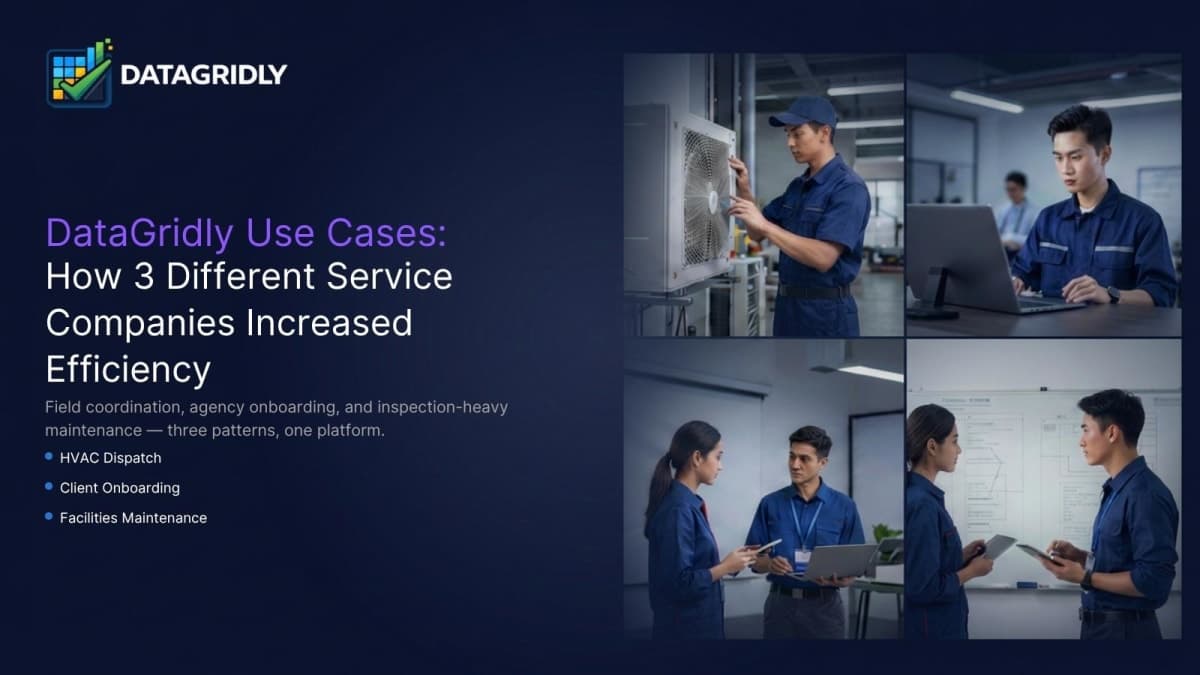
Three real-world patterns—field coordination, client onboarding, and inspection programs—and how structured tables plus automations improved throughput.
Read article
When a full database is overkill and a spreadsheet is too loose—how DataGridly sits in the middle for service operations and SMB operational systems.
Read article
Why scheduled and row-driven automations matter for service businesses, and how DataGridly fits reminders, escalations, and status hygiene into one place.
Read article
A short tutorial mindset guide for managers who want clean operational data without SQL or scripting—using DataGridly’s column-first editing model.
Read article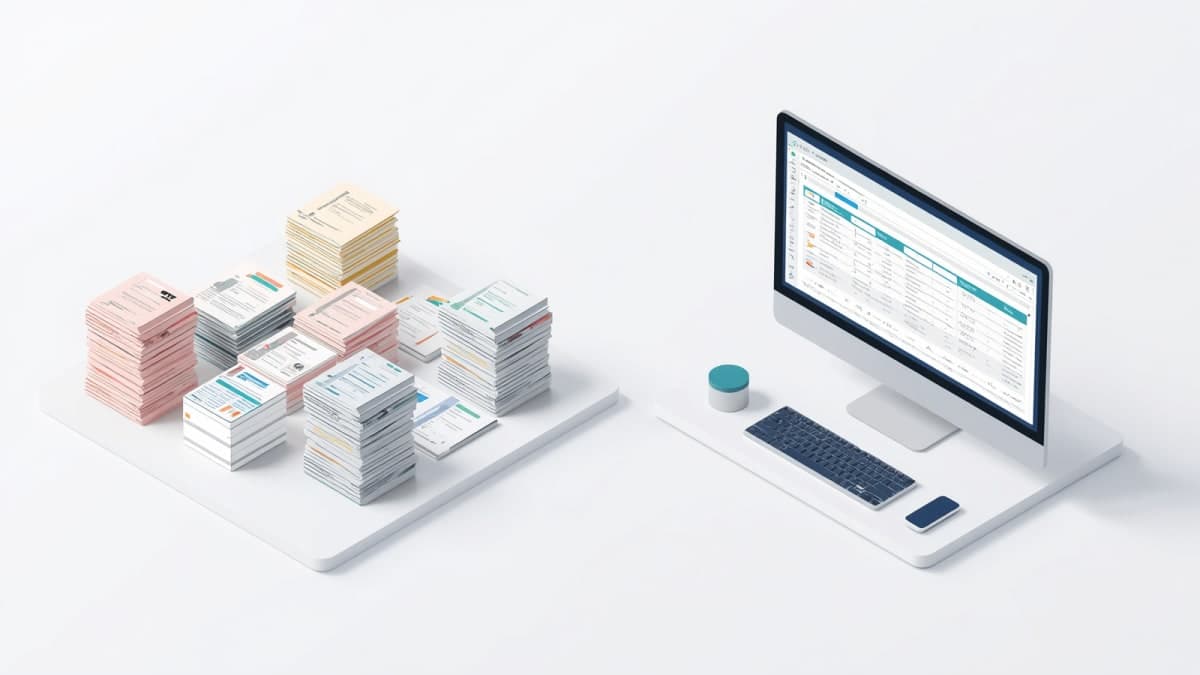
DataGridly vs spreadsheets: where shared grids still work, where they create operational risk, and how teams move to structured tables without losing speed.
Read article